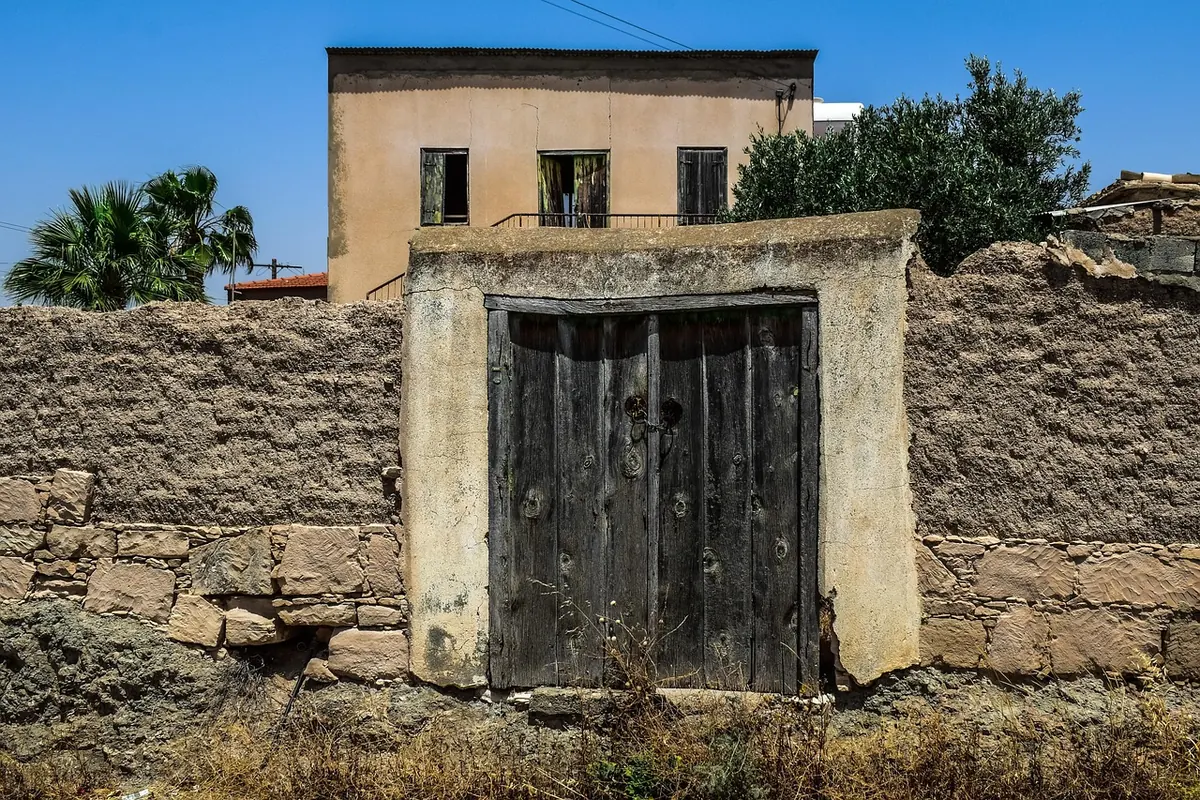
There's a particular moment on a walk when a building stops being scenery and becomes a question. The roof has gone, the windows are boarded, and a date stone over the door still says 1873 in confident lettering. Who built it? What was it before it stood empty?
Answering that question doesn't need a degree in local history or a trip to London. Most of what you need sits in council planning portals, old maps and county record offices, and a fair amount of it can be searched free from a kitchen table. Here is the order I'd work in.
Begin on foot, before you open a laptop
Spend half an hour at the site with a notebook. Record the Ordnance Survey grid reference, the building's shape and materials, any date stone, carved initials or name, the boundary walls, and what stands next door. Photograph the details: a bricked-up doorway, a faded painted sign, iron railings, a chimney stack. Those small facts become search terms later, and a name carved on a lintel is worth more than an afternoon of guessing.
Stay out of unsafe or private buildings. Derelict structures can be unstable, and asbestos is common in anything built before the 1980s. Photograph from the road or a public footpath, and if you want to cross land, find the owner and ask first.
Old maps: the quickest way to watch time pass
Maps answer the question "what changed, and when" more cheaply than anything else.
- The National Library of Scotland's map collection covers the whole of the UK and lets you lay Ordnance Survey maps from different decades over one another. Watching a field become a terrace, then a factory, then a car park is genuinely addictive.
- Tithe maps (mostly 1830s–1840s) come with apportionment schedules that name owners and occupiers field by field. Many sit in county record offices, and some are digitised.
- Estate maps, enclosure awards and nineteenth-century town plans fill the gaps, especially in rural areas where OS coverage is thin.
- First edition six-inch OS maps are useful for spotting buildings that later vanished. Newer editions show your building appearing or changing use.
Note the year of every map you use and build a simple timeline. A building that appears between 1890 and 1900 gives you a decade to search, which is far better than "sometime in the Victorian era".
Planning records and the historic environment
The council planning portal
Most local authorities publish applications online, often back to the 1970s and occasionally earlier. Search by address and postcode. Decision notices, drawings and officer reports describe the building as it was, list previous uses, and sometimes include a heritage statement — a full history written by someone who has done the work for you.
Designation and records
- Listed building entries: Historic England's list covers England, with equivalent registers for Scotland, Wales and Northern Ireland. Entries give a date, an architectural description and often the original use.
- Historic Environment Records hold archaeological and building surveys, aerial photographs and details of earlier investigations.
- Conservation area appraisals are worth reading; they often summarise the history of a whole street in a few paragraphs.
Archives, newspapers and directories
The county record office or local studies library is where the story thickens.
- The National Archives' Discovery catalogue searches collections across hundreds of UK archives at once. It's the sensible first stop before you travel anywhere.
- Local newspapers: the British Newspaper Archive is subscription-based, but many libraries offer free access on their own computers. Reports of fires, auctions, inquests and shop openings are gold.
- Trade directories such as Kelly's list businesses street by street, year by year, so you can follow a pub, workshop or corner shop through the decades.
- Census returns from 1841 to 1921 show who lived there and what they did for a living. The 1921 census is available through Findmypast; earlier returns appear on several commercial sites that libraries usually subscribe to.
- Deeds, wills, rate books and poor law records can identify owners and tenants, though they take longer to interpret and the handwriting is a skill in itself.
Order documents in advance where you can. Most archives ask you to request items before your visit, and some charge for photocopies. Take a pencil, a camera and patience.
Turning notes into a story
Keep a research log from day one: where you looked, what you searched, what you found and what you didn't. Note the reference number and date of every document, because you will forget.
Then cross-check. A date on a map, a name in a directory and a planning application should agree with each other. Where they don't, you've found something interesting rather than a problem — perhaps a rebuild, a change of name, or a boundary that moved.
Be honest about gaps. "The building appears between 1889 and 1896; the architect is unknown" is a better sentence than a confident guess. If you plan to publish anything, check the archive's rules on reproducing images, and ask the owner before photographing on private land. And if the research turns into a wish to buy, restore or alter the place, speak to the council's conservation officer and take proper professional advice before assuming anything is permitted — listed buildings and conservation areas have their own rules.
A practical first afternoon
Do this and you'll have a decent outline within a few hours.
- Visit safely and record the fabric of the building in notes and photographs.
- Find the site on the National Library of Scotland's map viewer and note the first map on which it appears.
- Search the council planning portal by address and read the officer reports.
- Check the Discovery catalogue and the local Historic Environment Record for anything already written.
- Bookmark the county record office and the local newspaper index for a longer visit.
Almost every abandoned building has a paper trail. It's simply spread across a handful of places, none of which advertise themselves well. Work through them in that order and the empty shell starts to fill in: decided dates, named people, and reasons why it ended up as it did.
Photo: DariuszSankowski / Pixabay