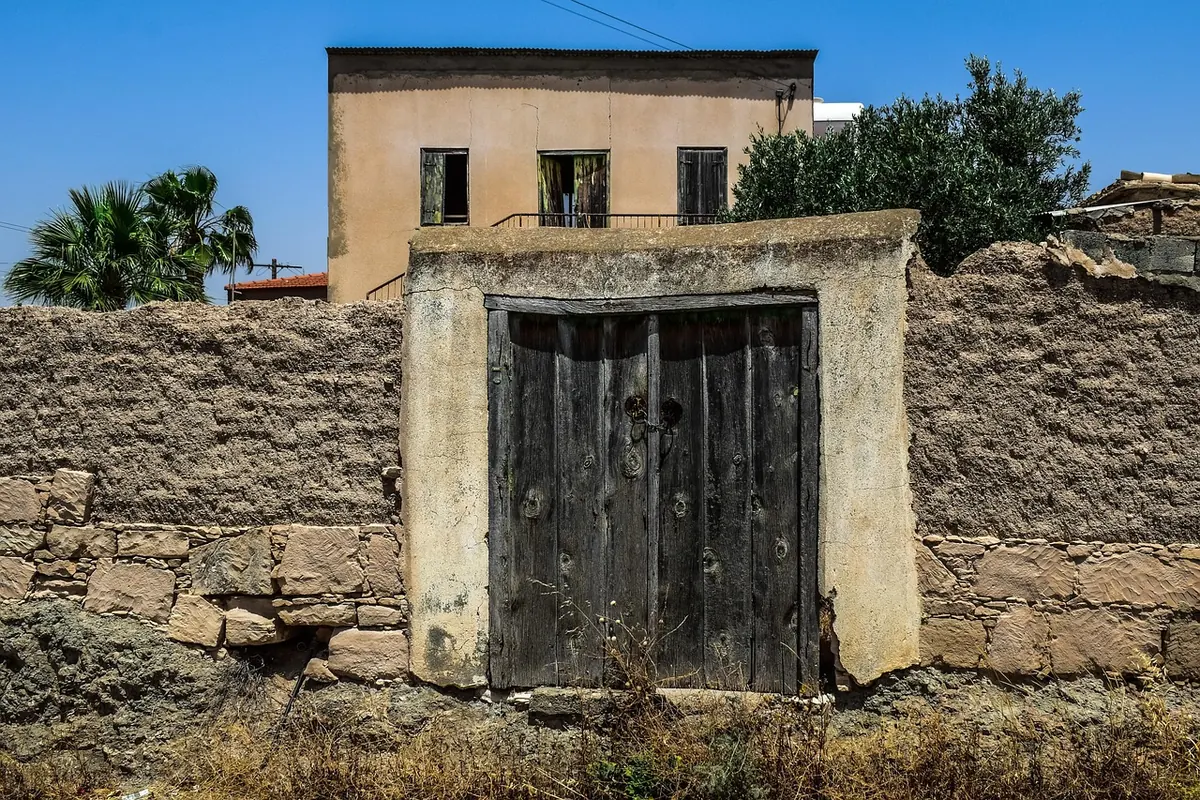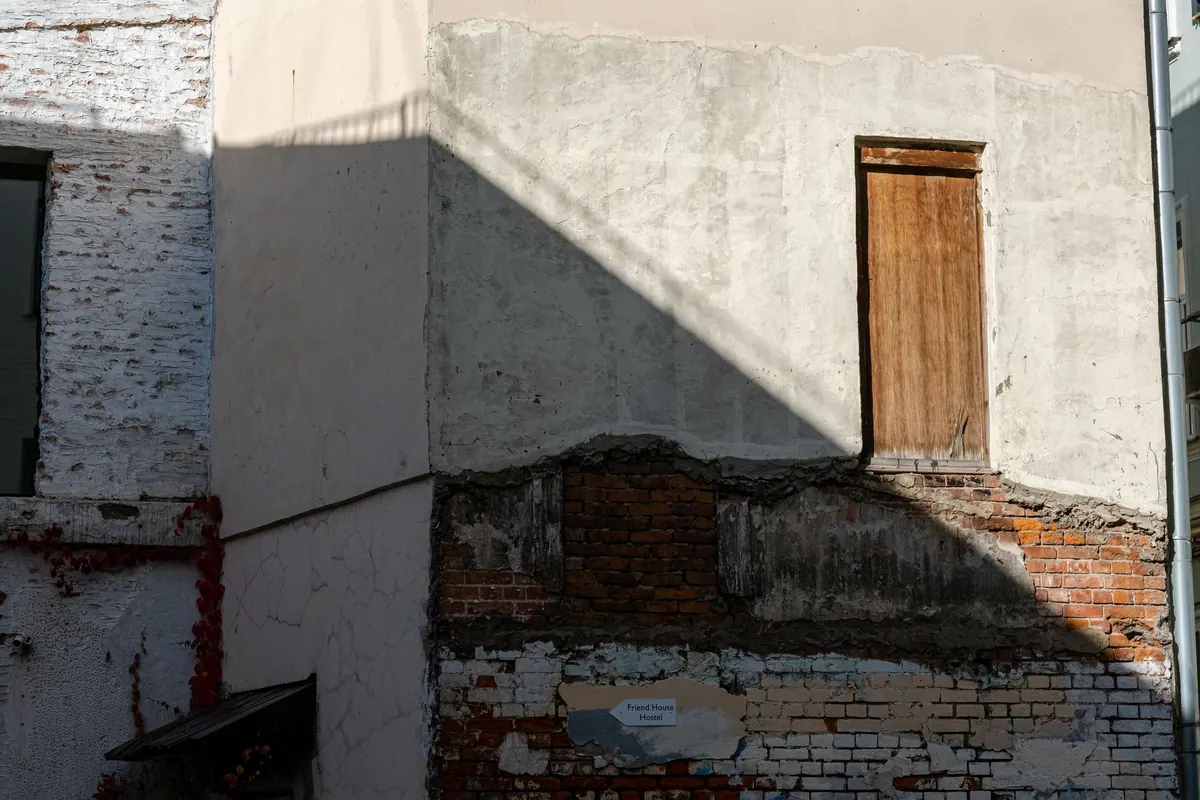
There is a particular moment on a good walk when a roofless shell appears through the trees and you have to decide what you are looking at. Is this a farmstead abandoned in living memory, or something that has stood open to the sky for six hundred years? At a glance the two can look identical. In every other respect — your safety, your legal footing, and anything sensible you might say about the place afterwards — they behave very differently.
Look at the fabric before the atmosphere
Every structure in a field is telling you two things at once: how it was built, and how it has been treated since. Feelings are unreliable here. A mossy corrugated-iron barn can look ancient at dusk, while a well-consolidated medieval wall can look almost new.
Start with the mortar. Traditional lime mortar is soft, pale and often gritty, and it erodes back from the stone rather than gripping it. Hard grey cement pointing hints at 19th- or 20th-century work, though it also turns up on medieval walls that were "improved" by well-meaning repairs, so treat it as a clue rather than a verdict. Then work through the rest of the fabric.
- Cavity walls, engineering bricks, and uniform machine-made bricks in tight, even courses
- Mass or reinforced concrete, especially where rust staining and spalling have exposed the bars
- Corrugated iron, asbestos cement sheeting, concrete blocks and pre-cast panels
- Steel-framed windows, plastic conduit, ceramic cable clips, rubber or PVC wiring, meter boxes
- Wire nails and screws with plastic wall plugs where older work used cut nails and timber pegs
- Traces of services: gas pipes, water tanks, drain gullies, redundant gutter brackets
A word on asbestos. If you see grey, fibrous sheeting, do not break it, scrub it or move it. It is a serious health risk, and the sensible course is to leave it alone and take professional advice before anyone goes near it.
Where the details survive
Fittings last longest in sheltered spots. Look inside window reveals, in joist pockets, under stairs, and along the faint line where a skirting board once sat. Fireplaces and thresholds rarely lie. So do the ghosts left behind: a shadow of limewash where a partition stood, a row of joist holes in a gable, the change in floor level between rooms.
A ruin keeps its plan but loses its detail
Ruins are read as ground plans. Walls come down to footings or a few low courses. Lintels, glass, doors, floors and services are gone, and rubble spreads outwards in a skirt beyond the wall line. Where a building stood you often find a platform, a terrace cut into a slope, or a scatter of dressed stone reused in a nearby hedge. Around it may be earthworks: holloways, leats, garden banks, ridge and furrow.
Managed ruins give themselves away as well — mown grass, gravel paths, capped wall heads, fresh lime repointing, perhaps a discreet stainless-steel tie holding a gable together, and usually a small interpretation board or a fence. Those are strong signs that you are standing in front of a scheduled monument or a site cared for by a trust or local authority.
Decay is not the same as age
Old does not mean safe, and unsafe does not mean old. A 1970s industrial shed with a collapsing roof is far more dangerous than many a medieval church wall. Age tells you nothing about whether a floor will hold, whether there is a well or a shaft under the nettles, or whether that gable will move in the next strong wind. Assume nothing, and keep your distance from anything that looks as though it has recently fallen down.
Follies, shams and other liars
Not every ruin is old. The 18th and 19th centuries produced sham ruins deliberately: tumbled walls, mock keeps, grottoes and eyecatchers built to look Picturesque from the windows of a country house. Some genuine ruins were heavily rebuilt a hundred years ago, which is why you sometimes find neat, regular masonry sitting on rough medieval footings.
Industrial sites complicate matters further. A lime kiln or a lead-smelting flue can look prehistoric after a century of neglect, while a two-thousand-year-old earthwork can be almost invisible under pasture until the light is low and slanting. Age is a poor guide on its own.
The paperwork will settle most arguments
Once you have a grid reference, the records do the heavy lifting:
- Your local Historic Environment Record, which lists known archaeological sites and finds
- The statutory lists of scheduled monuments and listed buildings
- Historic Ordnance Survey maps, tithe maps and apportionments, estate plans and sale particulars in local record offices
- National records such as Canmore in Scotland, Coflein in Wales, and the equivalent historic environment record for Northern Ireland
- Aerial photographs and lidar, which reveal earthworks invisible from the ground
- Local archaeological and historical societies, who often know a site better than any database
Records are patchy, though. A blank on a map means nobody has written it down yet, not that nothing is there. A site can be missing from every list and still be protected by a designation you have not checked — or by nothing at all.
What the distinction means on the ground
- Access. Nearly all of this is private land. In England and Wales trespass is generally a civil matter rather than a crime, but that gives you no right to be there and no protection if something goes wrong. In Scotland, responsible access rights do not extend to buildings, their curtilage, or anywhere you would disturb work or privacy. Ask first, and take no for an answer.
- Protection. Scheduled monument consent is needed for most works to a scheduled monument, and it is an offence to use a metal detector on one without consent. Listed building consent applies to listed buildings whether or not they still have a roof. If you are planning anything beyond looking and photographing, seek professional legal and planning advice.
- Safety. Masonry, shafts, wells, floor voids, glass and unstable roofs are all common. Look from outside wherever you can, never go in alone, and tell someone where you are going.
- Ethics. Record, do not collect. Photograph, note the grid reference, sketch, measure — then leave every sherd and stone where it lies. Finds can be reported through the Portable Antiquities Scheme. If you come across human remains, stop, leave them undisturbed and contact the police.
- Drones and photography. Check the Civil Aviation Authority rules that apply to your aircraft and get the landowner's
Photo: Maria Tsegelnik / Pexels