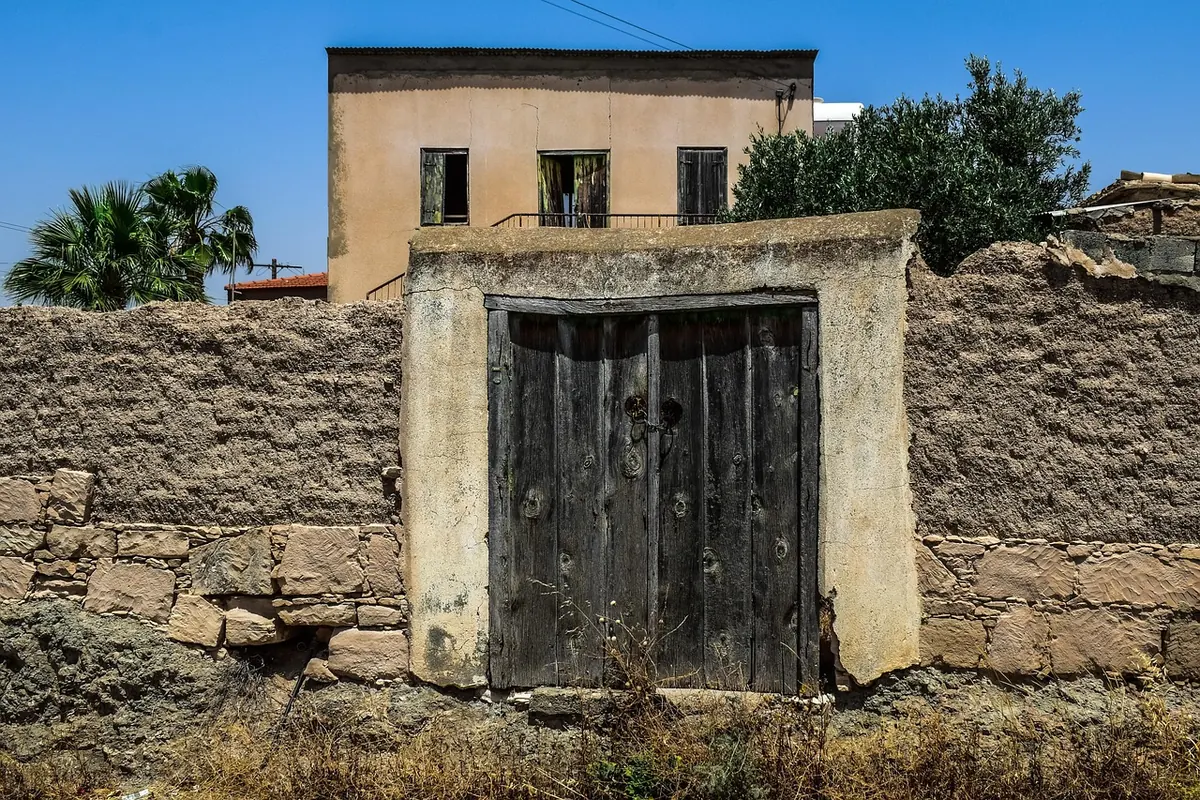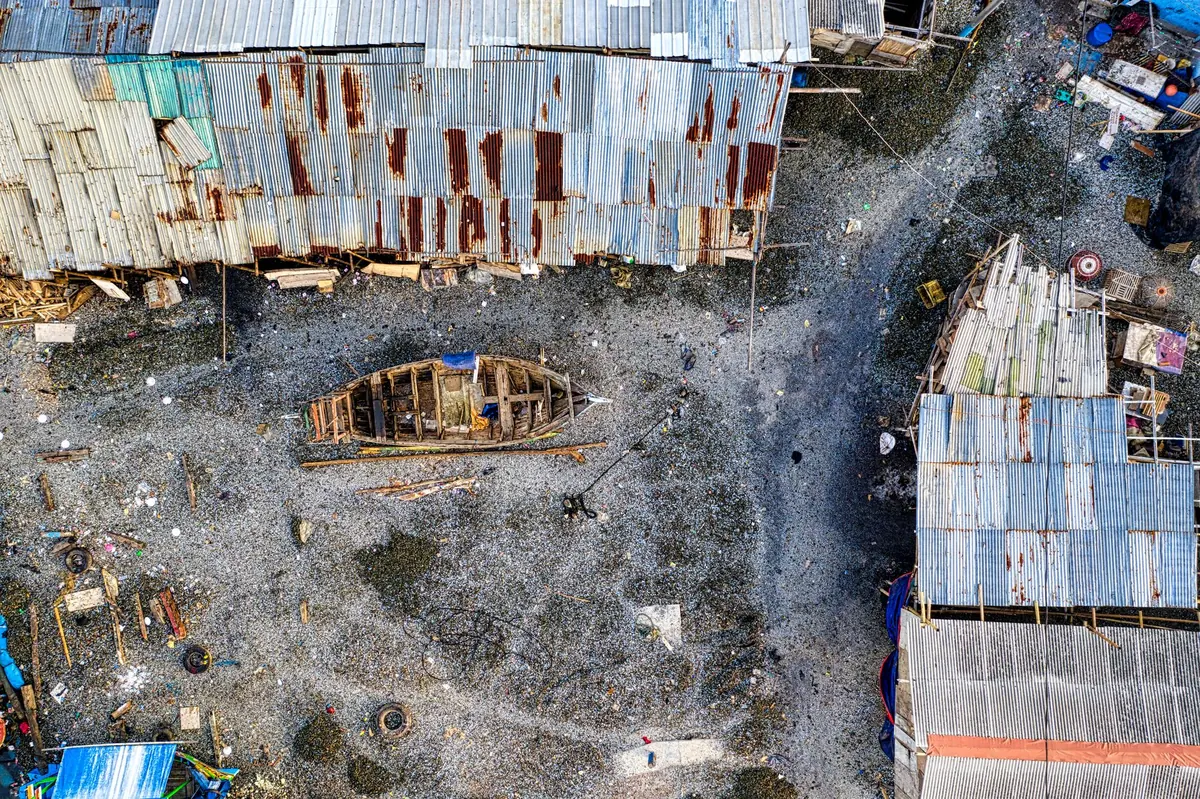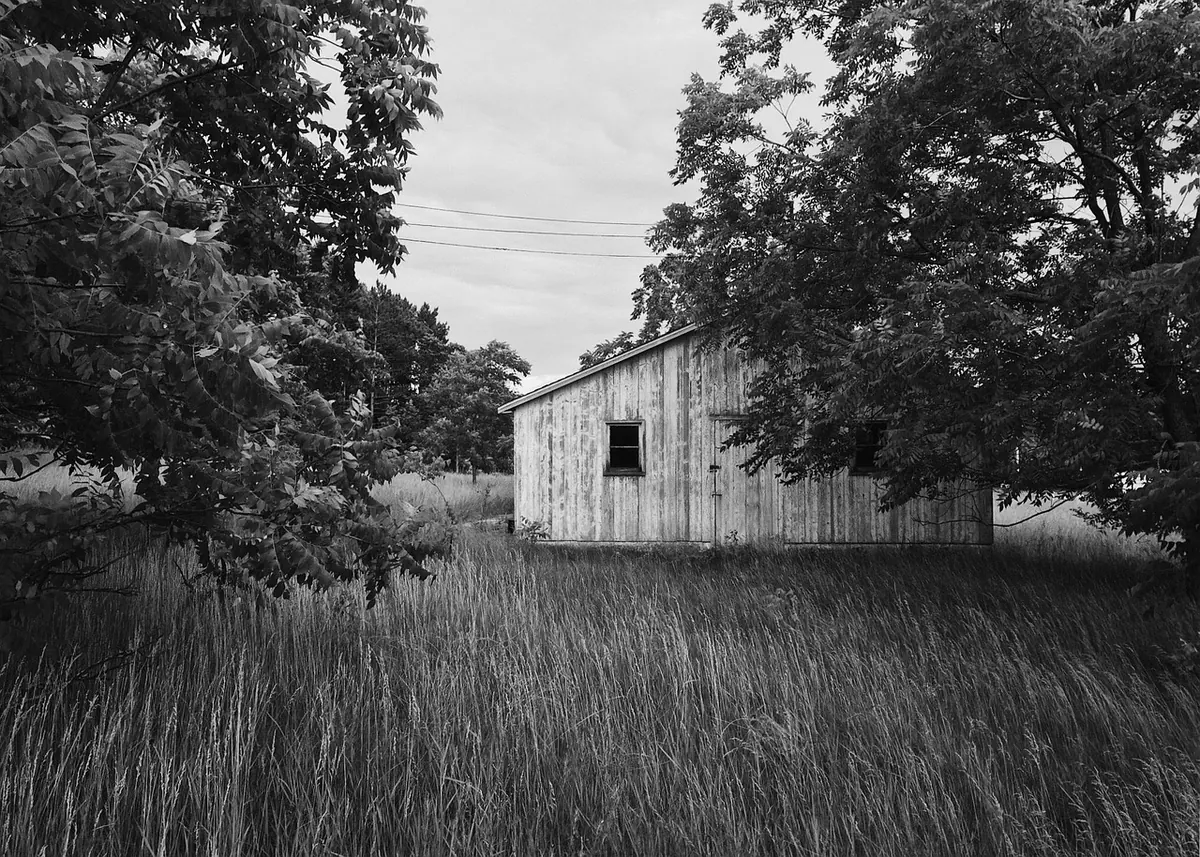
There is a particular smell to an old barn in late October. Wet slate, damp straw, the sour tang of rust, and something faintly like coal smoke that never quite goes away. The ivy has stopped growing and started hanging. Nettles that stood chest-high in July are keeling over, revealing things you could not see in summer: a rusted hay rake, half a partition wall, one boot.
Autumn is the best season of the year for photographing abandoned agricultural buildings, and it is not only about leaf colour. The sun sits low for weeks on end, mist lingers in the dips until mid-morning, and the undergrowth thins just enough to let you get close to walls you have been circling since spring.
Work With the Light, Not Against It
Low autumn sun is generous but easy to overdo. A south-facing stone wall in full October glare turns into a white nothing, with every bit of texture burned out of it. The trick is to use the edges of the day and save the middle for softer conditions.
Shoot the first hour after sunrise for mist and flat, pearly light. Come back in the last hour before sunset for warm side-lighting that rakes across stone and timber and shows up every crack. Between those windows, grey overcast is your friend: no harsh shadows, no blown highlights, and detail in the ivy leaves and lichen that bright sun simply destroys.
Damp days are underrated. After rain, slate goes almost black, rust deepens towards orange, and moss glows. Check the forecast for a clear, still night following a wet day; that combination usually brings fog into low ground, valleys and anywhere a stream runs. Get there before dawn, because by nine it has often lifted.
Look for Rust, Ivy and Everything Between
Rust reads warmly in autumn light rather than grimly. Corrugated tin roofs, iron hinges, the rims of a collapsed cart, a plough left against a gable end. The most interesting part is rarely the rust itself, but the join where rust meets flaking paint or weathered timber.
Ivy is the other great subject. It stays green when everything else drops, so it holds structure in a frame and frames doorways, softens gable ends and drapes over window openings with a patience that looks deliberate. Green against orange rust is the colour pairing of the season.
Worth a whole frame, rather than a snap:
- Ivy creeping over rusted sheet metal, backlit at first light
- Dew or the first frost on bramble and nettle leaves
- Seed heads — teasel, thistle, hogweed — against a dark interior
- Fallen roof slates, rotten floorboards, the grain of a broken beam
- Machinery half-swallowed by grass: wheels, chains, a rusted bucket
One warning. Giant hogweed sap can cause serious burns when skin is exposed to sunlight, and it grows happily along ditches and field edges. Learn to recognise it and do not kneel in it.
Kit and Settings for Overgrown Places
Travel light, because you will be climbing through gaps and crouching under lintels. A tripod that goes low matters more than a heavy one. Take a wide lens in the 16–35mm range, something macro for detail, a polariser used sparingly, a remote release, a head torch, a kneepad, wellies and a microfibre cloth. Cold mornings drain batteries, so keep a spare in an inside pocket.
Settings That Usually Work
- Aperture: f/8 to f/11 for the building; wider only when you want the foreground to fall away.
- ISO: 100 in good light, up to 400 indoors. On a tripod, shutter speed is not the problem.
- Exposure: expose for the brightest area — sky or a window — and lift the shadows when editing.
- Contrast: bracket two or three frames when a bright window sits inside a dark interior.
- Focus: use live view at low angles, and focus-stack three frames for macro rather than stopping down to f/22 and softening the lot.
Composition in a Cluttered Space
Ruins are visually chaotic. Your job is to simplify, and the honest way to do that is with your feet. Zooming out from the same spot just adds more mess to the edges.
- Decide on one subject before you lift the camera: a doorway, a window, a machine, a tree growing through a roof.
- Find a frame within a frame. Shoot the interior through the doorway, or the field through a broken window aperture.
- Use a lead-in line: cart ruts, a fence, a fallen beam, the edge of a track.
- Get low, then get high. A low angle makes a sagging barn loom; a slightly raised one shows the layout of a collapsed roof.
- Scan the edges of the frame. Half a nettle in the corner ruins an otherwise clean photograph.
Repeat yourself on purpose. Roof trusses, window openings and rusted panels make strong patterns, and a series of three similar frames often says more about a place than one wide shot.
Permission, Safety and Countryside Manners
Buildings that look abandoned usually are not. They belong to someone, they store things, they sit in fields with livestock, and many are structurally unsound. Knock on the nearest door, explain what you want, and offer to send a photograph afterwards. A two-minute conversation is almost always quicker than a long walk back to the car.
Access rules differ across the UK, and a field boundary is not the same thing as a public right of way. If you are unsure about where you may go, ask the landowner or check with the local authority, and if you need proper advice on access or land ownership, take it rather than trusting a forum thread.
Common sense covers most of the rest. Do not go inside a building with a sagging roof or a rotten floor, do not cross a field containing a bull, shut every gate you open, park so a tractor can still pass, and tell someone where you are going and when you expect to be back. No photograph is worth a fall through a floor.
Finishing Without Overcooking It
Autumn images go wrong in editing more often than in camera. Set white balance for the neutral grey of overcast light instead of leaving it on auto, lift the shadows a little, hold the highlights, and resist heavy clarity, vignettes and saturation. Clean up sensor dust against the sky, crop to strengthen the frame, and leave the rest alone. The colour was already there.
A Simple Autumn Field Plan
If you want one workable routine, this is it. Check the forecast the night before and favour a still, damp morning. Arrive before sunrise, park considerately, and walk the site once without the camera to see how the light falls. Shoot the wide establishing frame first while the mist is still doing its work, then move in for ivy, rust and detail. Leave before the light goes flat, review the files at home over a brew, and go back a fortnight later. The same barn will look entirely different once the leaves are down and the frosts have begun.
Photo: WOKANDAPIX / Pixabay